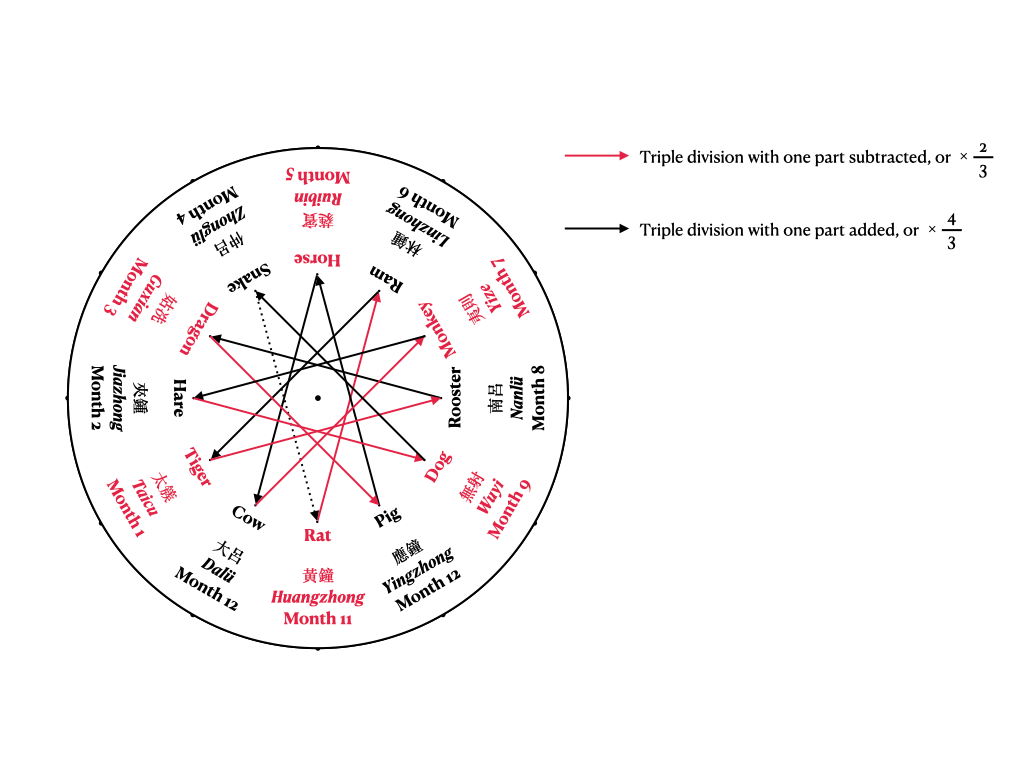
This is the third part of my translation of Key Points from the Treatises on Music (c. 680), or “Empress Wu’s Music Theory Primer.” These two chapters continue to discus the seven sheng, yet it also “previews” a significant concept in Chinese tuning theory in relation to the twelve tuning pitch pipes (or lü), before their proper treatment in juan 6 of the treatise: sanfen sunyi “triple division with one part subtracted or added.” This latter phrase describes the canonical method of computing the lengths of the twelve tuning pitch pipes, in which one pipe generates another in succession: specifically through the compounding multiplications by 2/3 and 4/3.
Tag Archives: Tuning
Empress Wu’s Music Theory Primer — Key Points from the Treatises on Music (c. 680), Table of Content and Chapter 5:1 “Distinguishing the sheng of musical notes, examining the origin of sheng.”
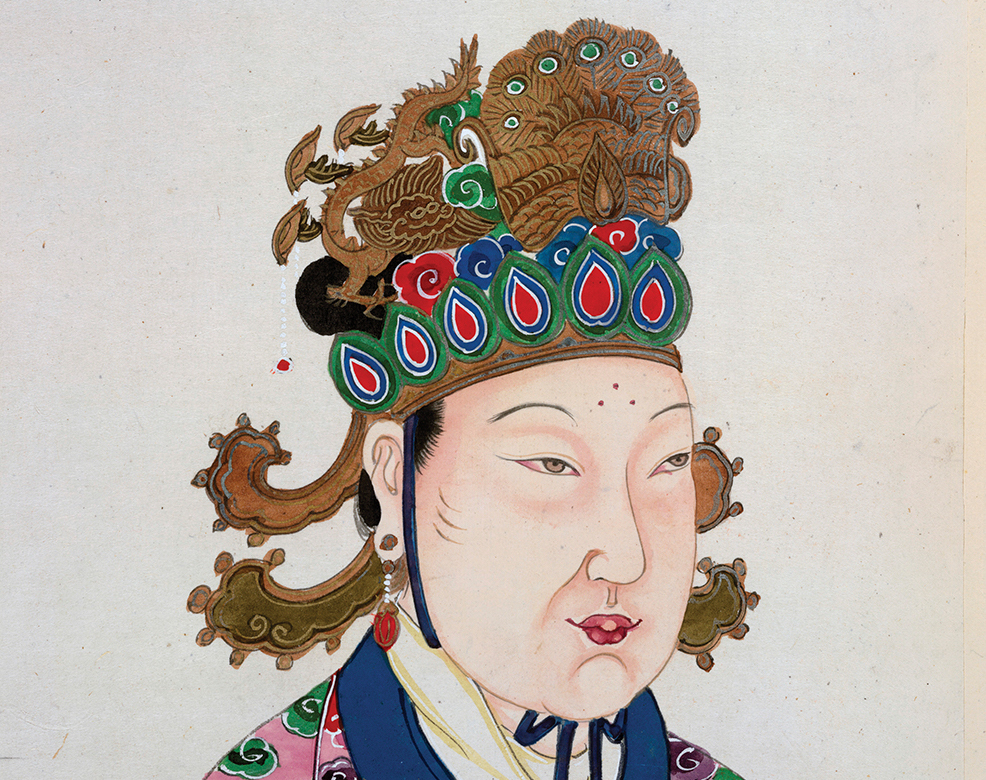
Beginning with this post, I will produce a complete, chapter-by-chapter translation of Key Points from the Treatises of Music (Yueshu yaolu 樂書要錄, c. 680). The treatise is special in many ways. It the earliest extant Chinese monograph on music theory and one of the earliest extant monographs on music at large. It is traditionally attributed to Wu Zetian (624-705), the only female emperor in Chinese history. The treatise’s very survival was also a testimony to the deep cultural integrations between medieval China and Japan. And, if these weren’t enough, the treatise, even with 70% of it lost, turns out to be an excellent textbook to Chinese music theory, particularly the key concepts of sheng (“sounds,” “notes of the scale”) and lü (“tuning” and “tuning pitch pipes”). Hence I am translating the surviving parts of this treatise in full, so that it can serve as a primer to Classical Chinese music theory for English speakers. This post translates the Table of Content and Chapter 1 of juan 5.
What music means — Ji Yun et al., “Music Category,” Introduction and Postface, from Summary Catalogue and Annotated Bibliography for the Complete Library in Four Sections (1798)
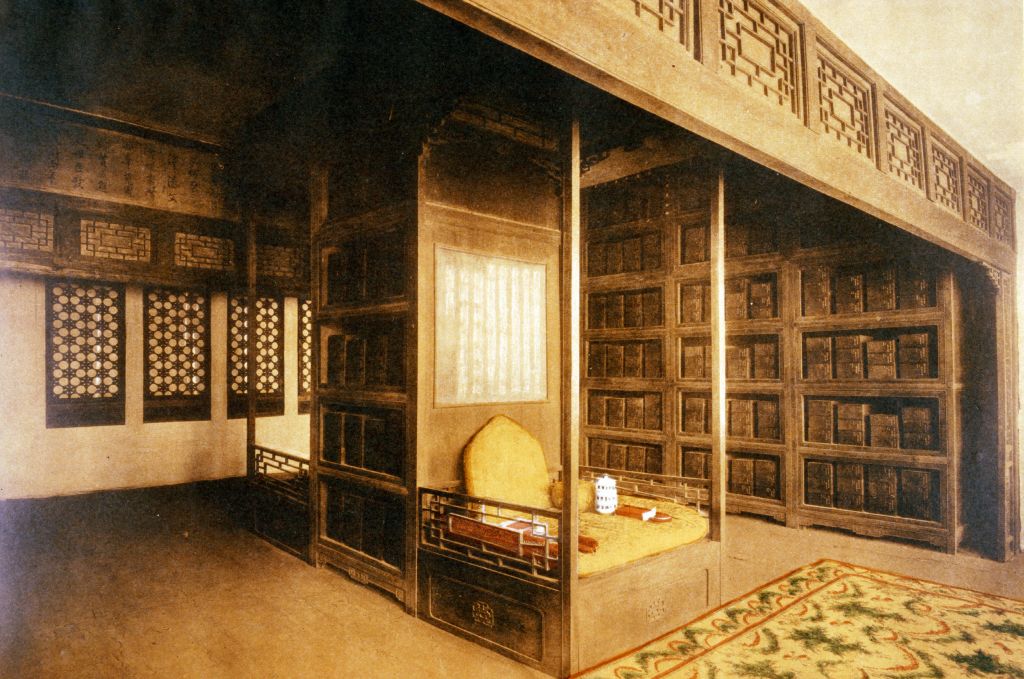
What is music? And is “music” a mistranslation for the Chinese concept of yue (樂)? Rather than defining exactly what “music” or yue is, dictionary style, I find it more stimulating to ask where music/yue falls within a particular mapping of the structure knowledge—for which a fancier word would be episteme. While many important cartographies of knowledge existed in the Classical Chinese corpus, arguably the weightiest due to its proximity to imperial power was The Complete Library in Four Sections (四庫全書, 1784/1803), published by the Qianlong Emperor (r. 1736-1796).
 From the Reed Ashes Pavilion